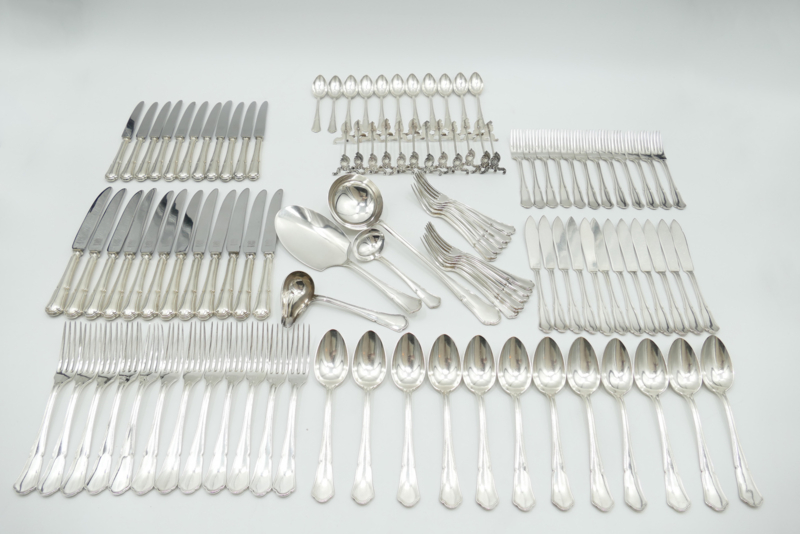
Wiskemann, Brussels - Silver Plated Cutlery Canteen - "No. 3 Contours" - 110-piece/12-pax. - Belgium, 1930-1960
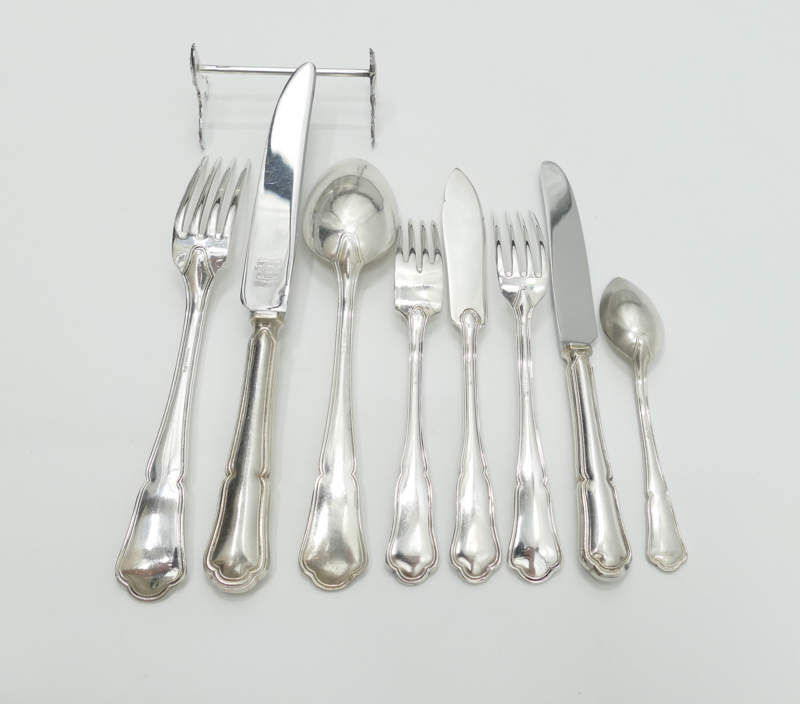
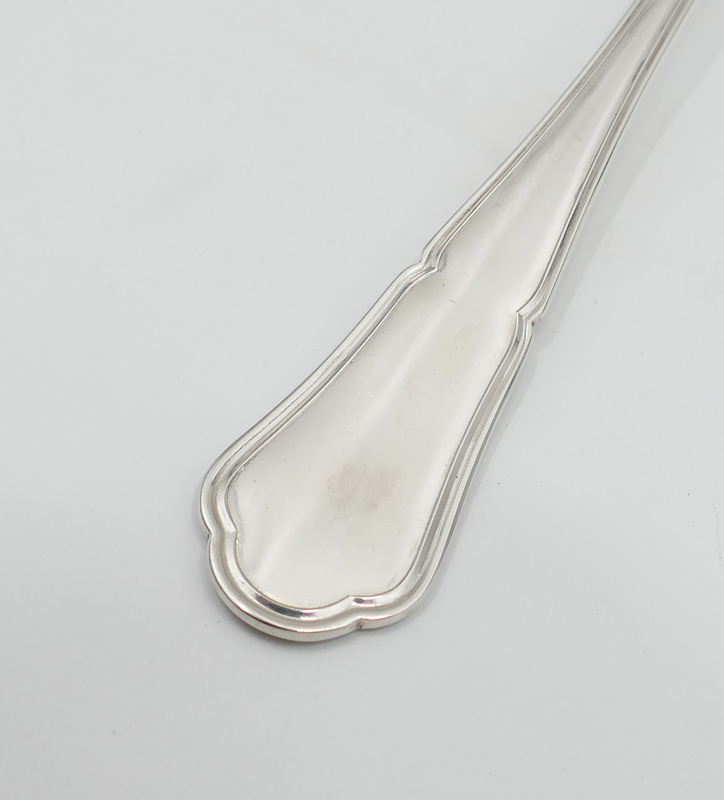
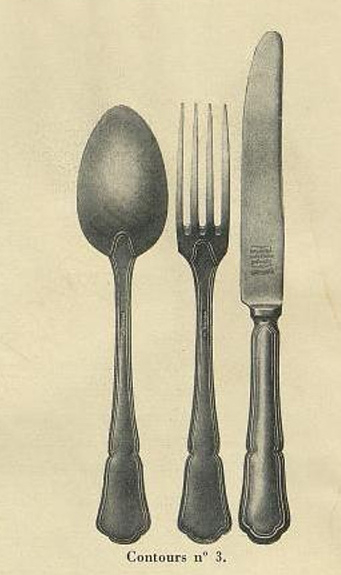
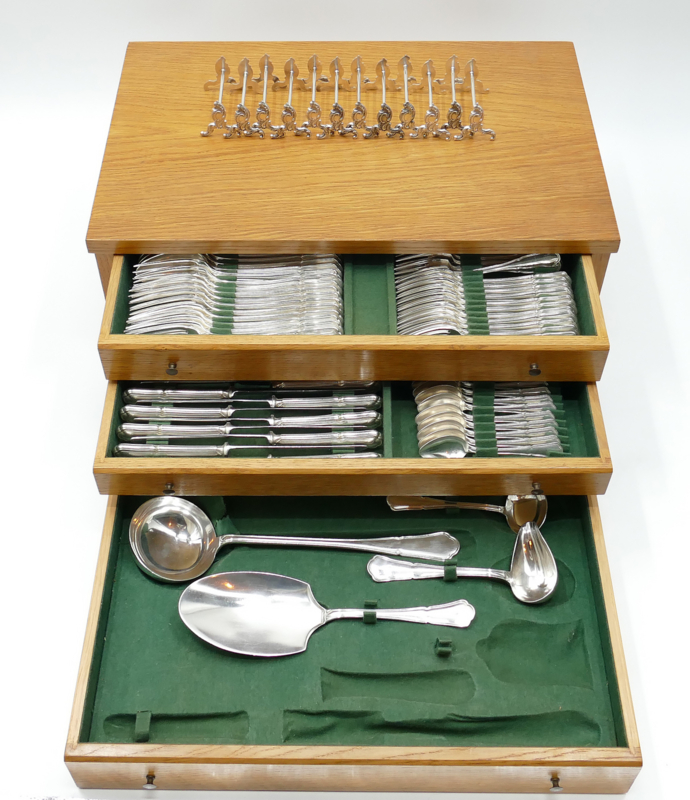
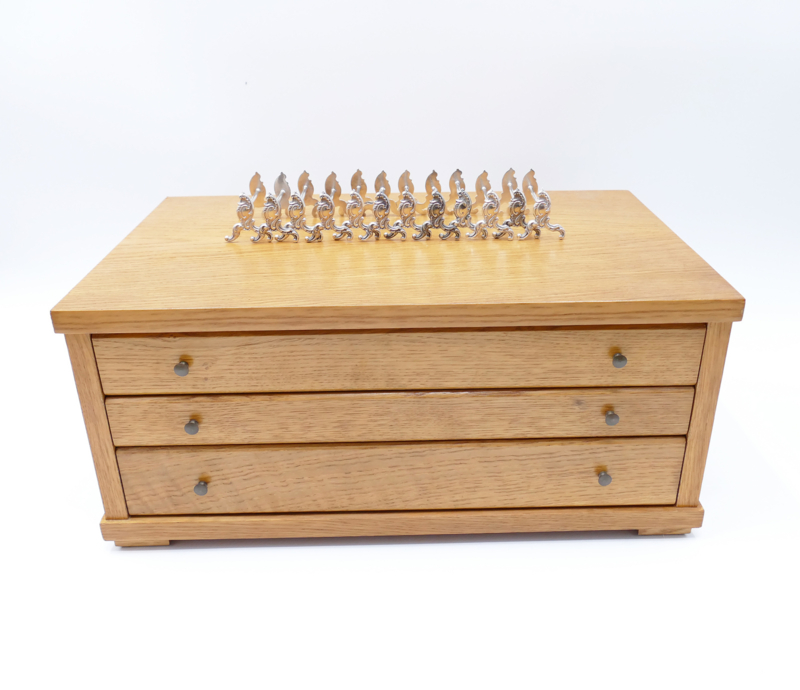
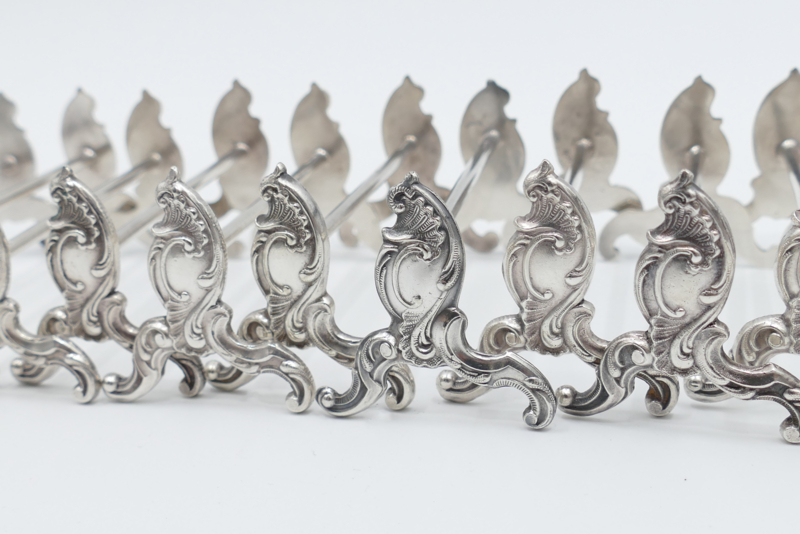
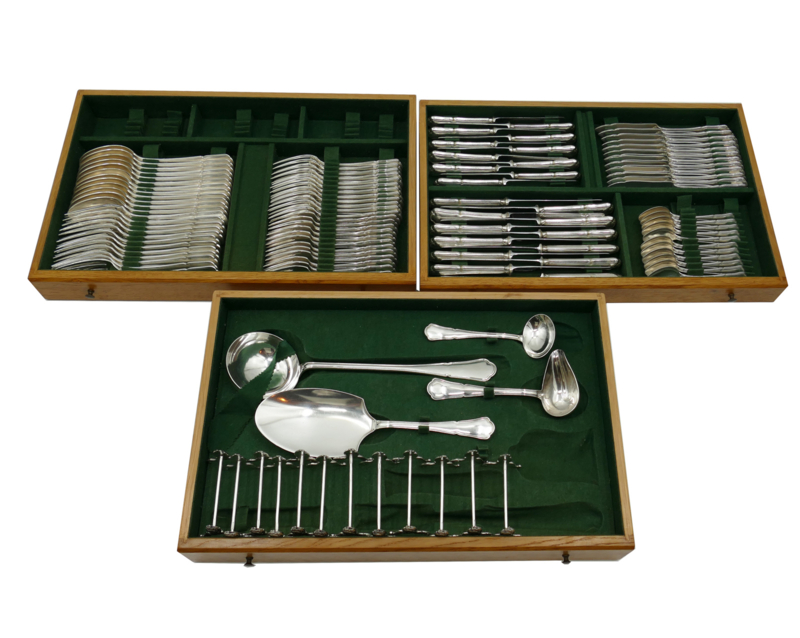
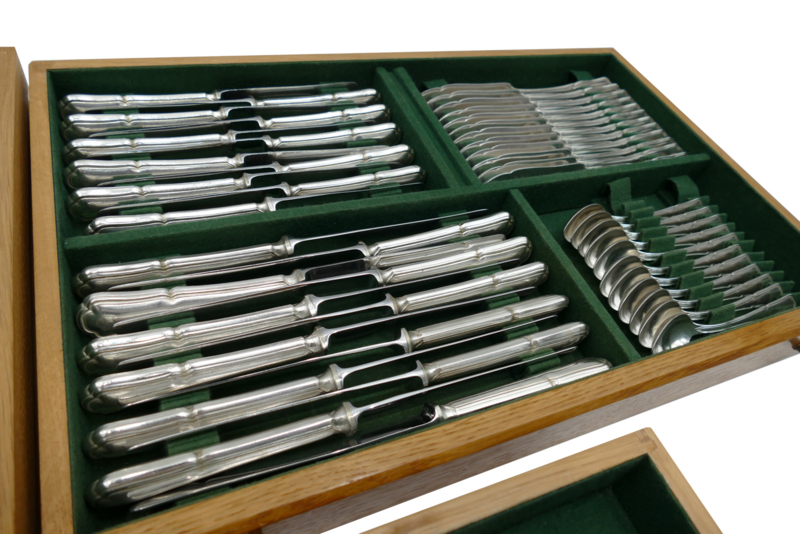
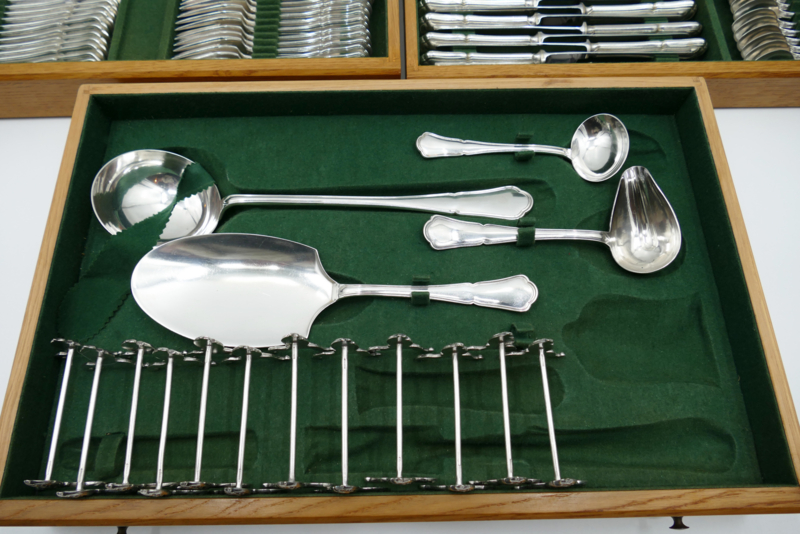
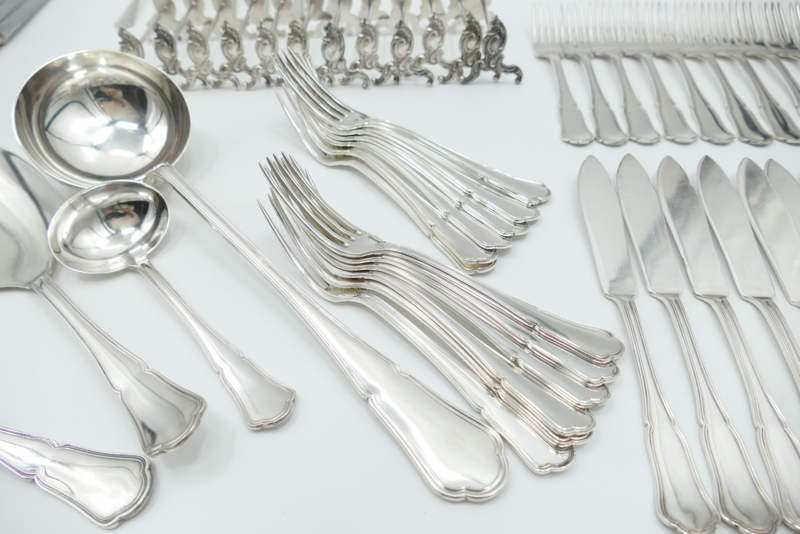
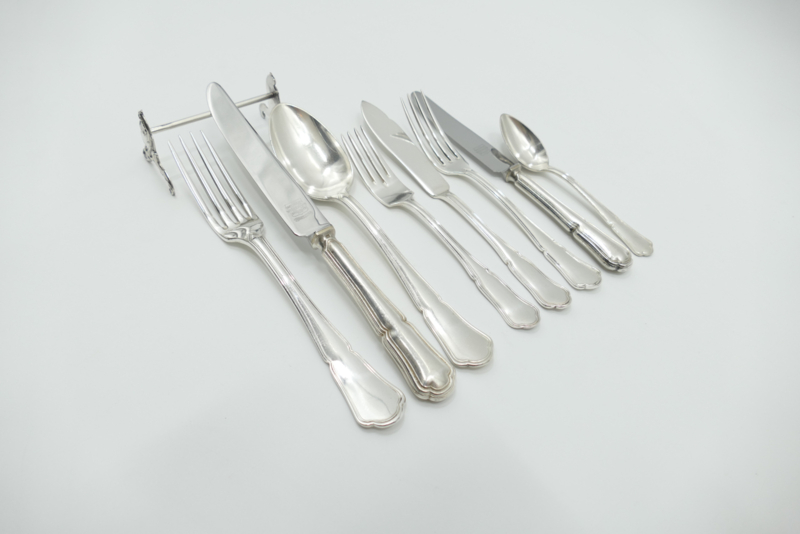
A magnificent silver-plated cutlery canteen from the years just after World War II, made around 1950 by the Orfevrerie Otto Wiskemann in Brussels. The solid wooden canteen with three drawers contains a cutlery set of no less than 110 silver-plated pieces – including serving cutlery, cutlery for appetizers, main courses, fish dishes, and the coffee table. The set is largely suitable for 12 people and offers 9 different pieces of cutlery for every guest. All pieces are decorated in the classic "Contours N.3" pattern, with a subtle Louis XV shape. Also included is a set of knife rests in the Rococo style, decorated with rocaille, C and S shapes, and tendrils.
Consisting of:
- 12 dinner spoons
- 12 dinner knives
- 12 knife rests
- 12 dinner forks
- 12 fish knives
- 12 fish forks
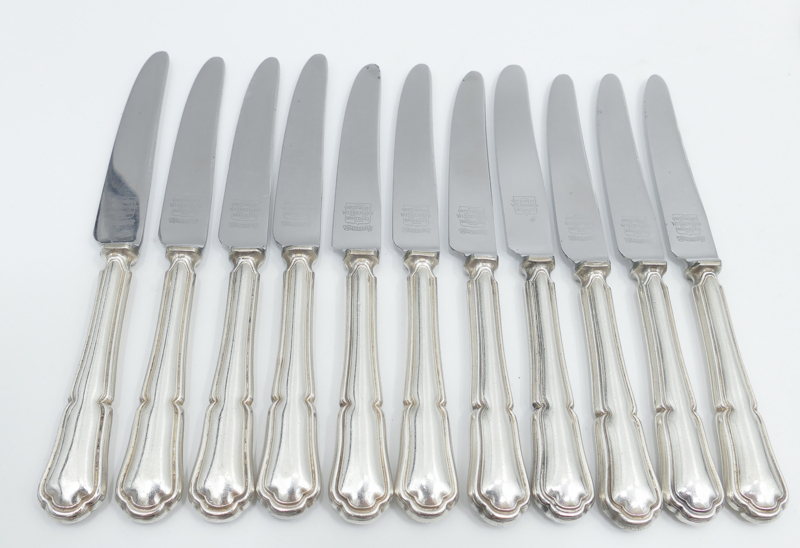
- 11 appetizer/lunch knives
- 12 appetizer/lunch forks
- 11 coffee spoons
Serving cutlery:
- Soup ladle
- Sauce ladle
- Gravy ladles
- Pomme duchesse scoop
The cutlery is in excellent condition for its age. There are some small scratches present. The silver plating is completely intact and the luster is beautifully preserved. Please view the photos for an impression.
The pieces are silver-plated on a base of 100 grams, except for the dinner spoons and dinner forks, which are plated on a base of 72 grams. Wiskemann used two different standards for most of its history.
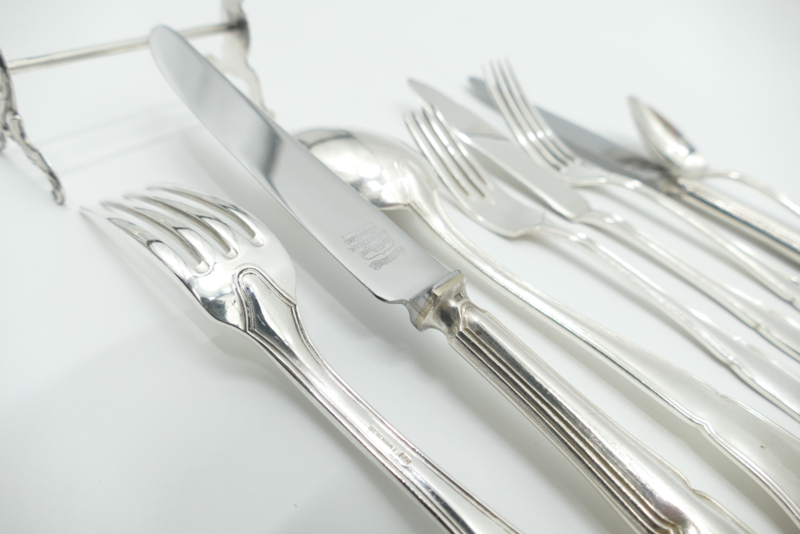
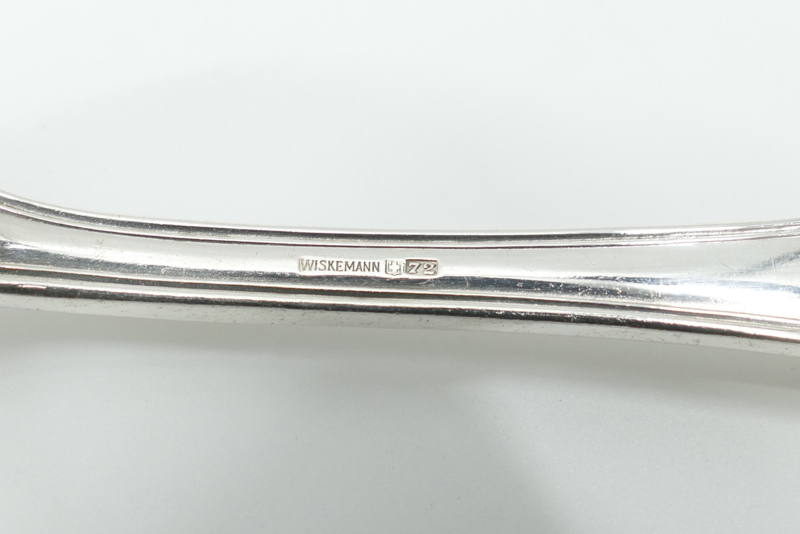
Marked under the tines of the forks and in the bowls of the spoons: [Wiskemann][+][72]/[60][x][x]. The blades of the knives also bear the Wiskemann logo. The last photo shows the cutlery model depicted in the 1931 sales catalogue.
______________________________________________________________________________________________________________
In 1872, Otto Leonard Wiskemann, a descendant of a German family with a long history in silversmithing, opened a workshop on the Rue des Longs Chariots in Brussels. In the preceding years, he had worked as an apprentice in Paris, where he acquired the necessary tricks of the trade. He had also witnessed the introduction of electroplating, introduced to the European mainland by Charles Christofle from England. Thanks to this experience and knowledge, Otto managed to start a company in the 1870s that would later grow into the most famous silversmith in Belgium and a symbol of quality. Its heyday lay between the two World Wars. The company eventually collapsed in the 1970s; a century of history of Belgian silversmithing came to an end.
| Specification | Description |
|---|---|
| Maker's mark | Orfevrerie Wiskemann, Brussel |
| Origin | België |
| Period | 1930-1960 |